Crypto, what?
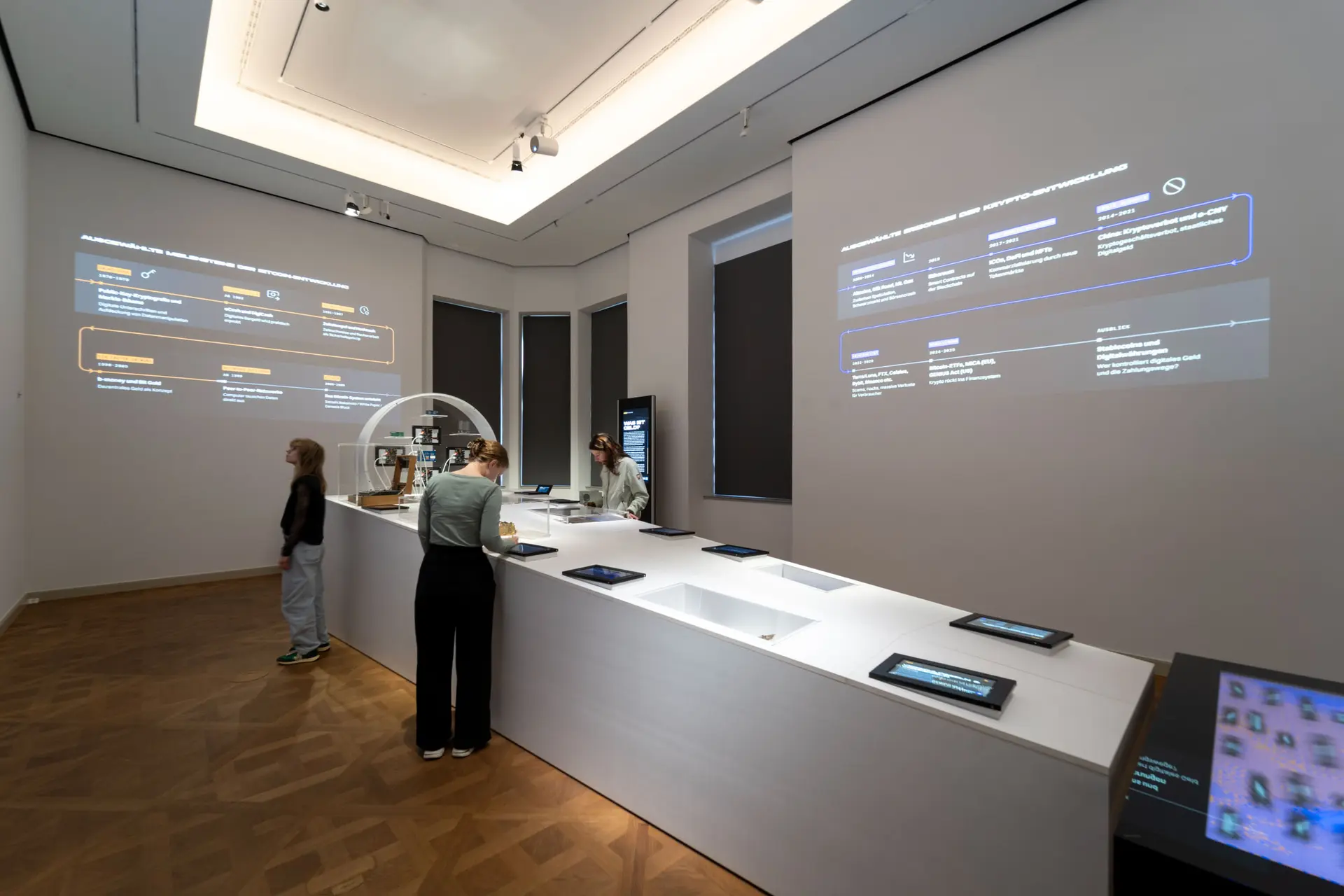
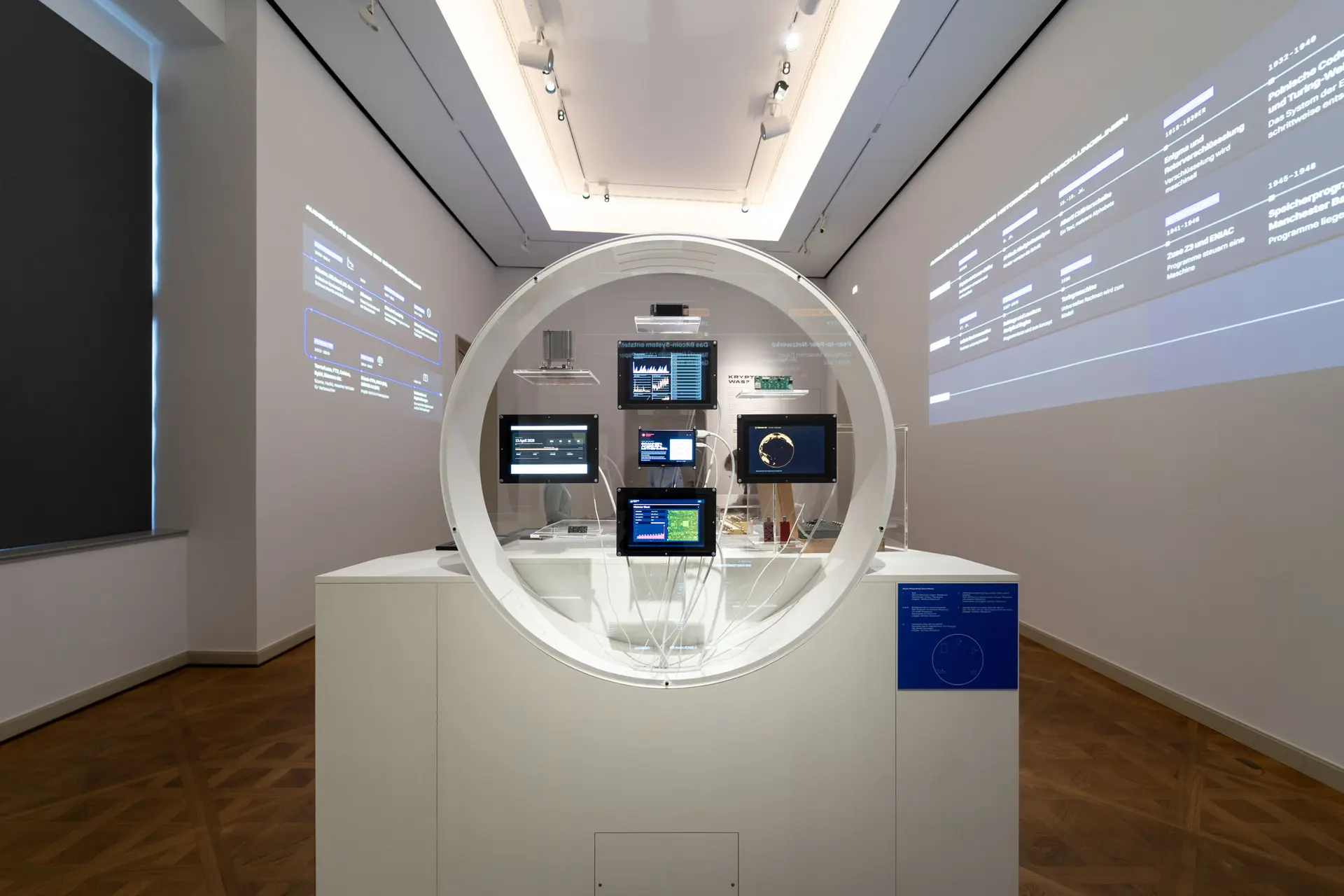
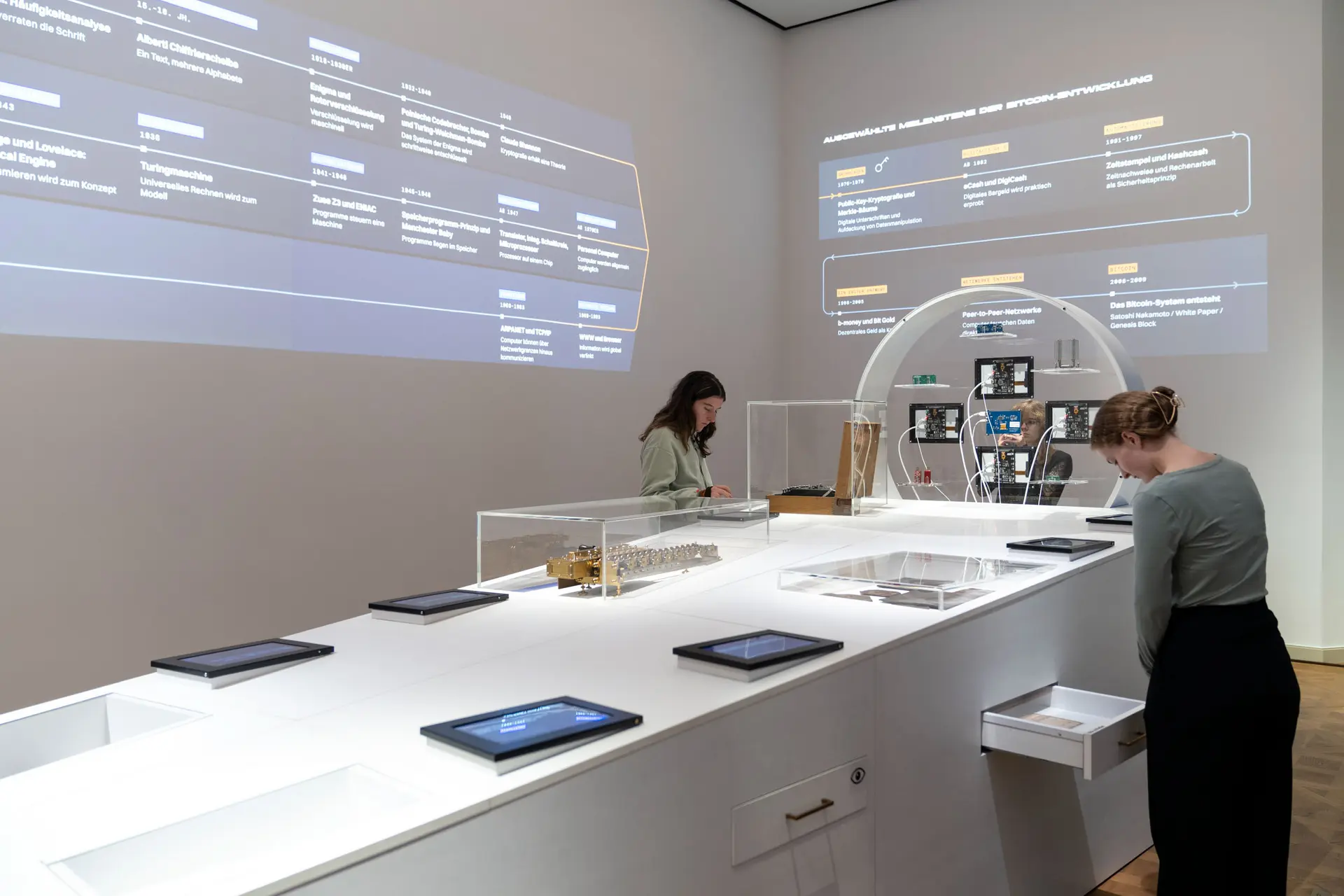
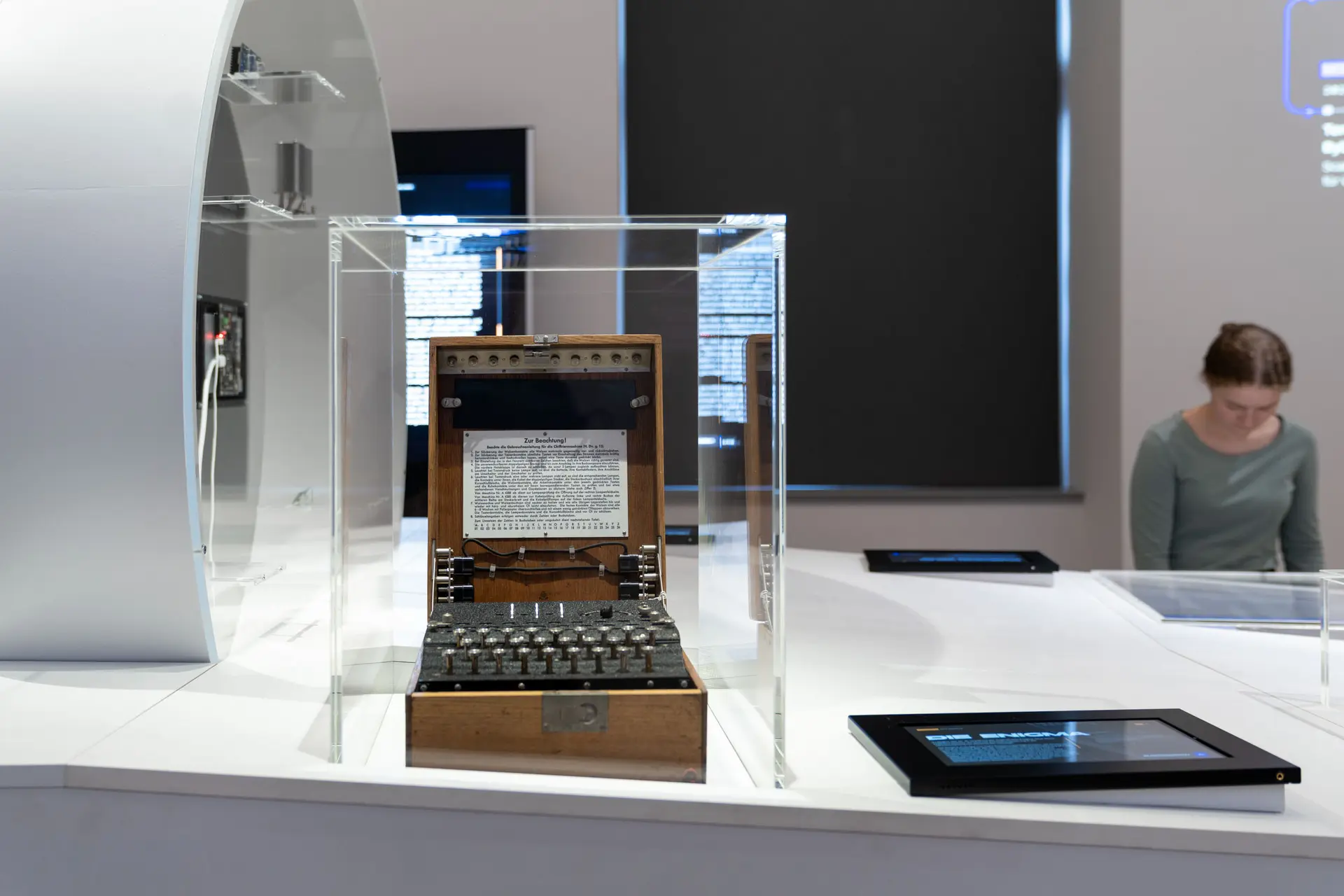
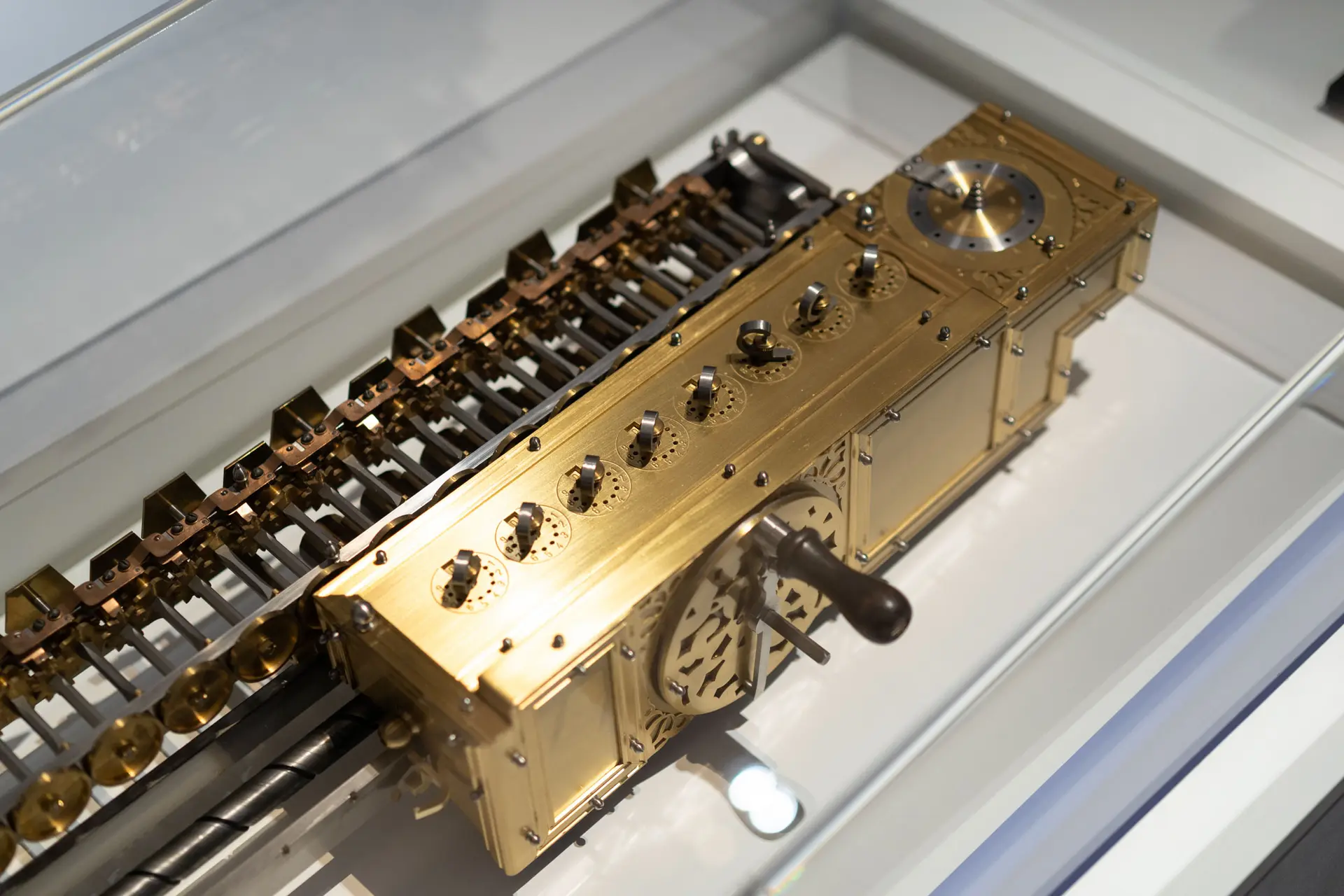
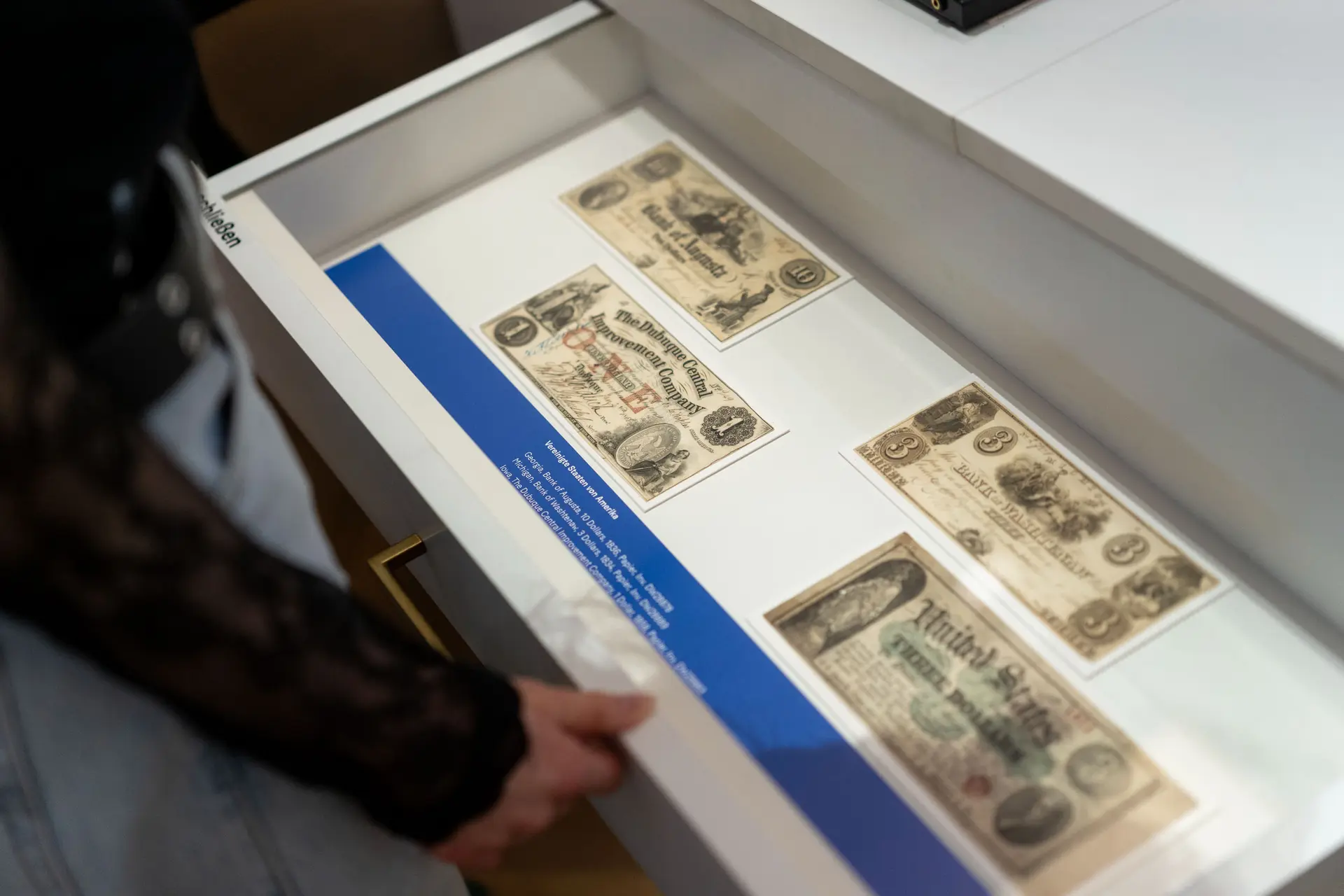
What do cipher equipment from the 16th century and Bitcoin have in common? How does the history of paper money help us understand today’s stablecoins? The technological foundation of today’s cryptoassets has evolved over millennia: People encrypted text in order to transmit secret messages. They built calculating machines and eventually connected computers to form global networks. From early ciphering techniques to mechanical computing devices and on to the Internet, the exhibition traces these developments through selected milestones. It shows how encryption, automated data processing and global networking came together in the Bitcoin system.
- Exhibition Site Residenzschloss
- Dates 03/10/2026—29/08/2027
-
Opening Hours
daily
10—17, Tuesday closed
Reformation Day,
31/10/2026
10—17
Buß- und Bettag,
18/11/2026
10—17
- Admission Fees regular 18 €, reduced 13,50 €, pupils (under 20 years) 2 €, children up to school age free, groups (10 persons and more) 16 €
Die Sonderausstellung
First presented in 2008 and launched in 2009, the open-source system Bitcoin was the first successful decentralized cryptoasset. But what do terms like ‘blockchain’, ‘public/private key’, ‘wallet’ and ‘mining’ mean? How can assets be transferred if there is no bank to manage the transactions? This exhibition demonstrates home mining and illustrates how networked computers verify and document transactions.
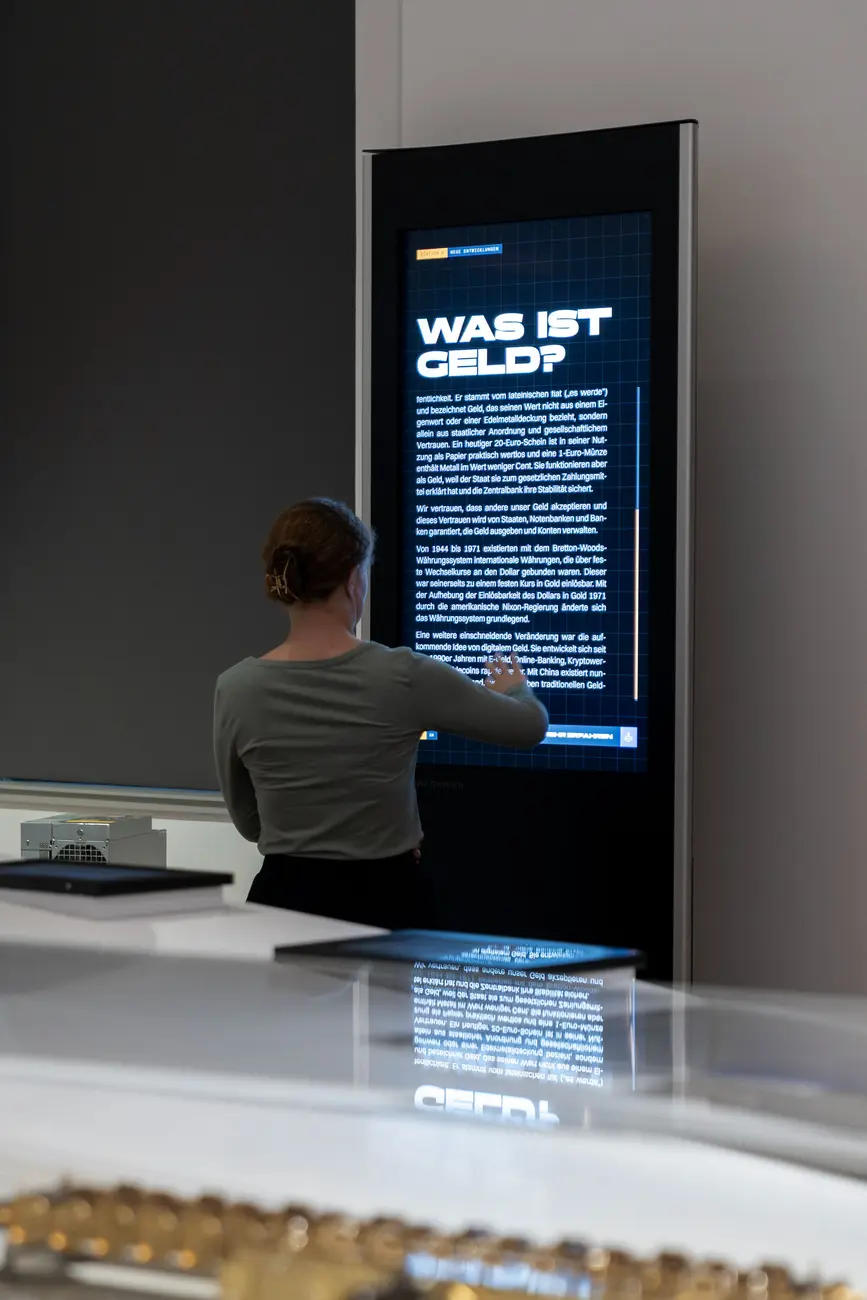
Based on Bitcoin a diverse crypto market has emerged. Coins, tokens and stablecoins are different regarding their technology, function and utilization. Not everything marketed as a cryptoasset is designed for lasting or reliable use. Through analogies drawn from monetary history, the exhibition reveals the tension between original ideals and real-world effects. They yield surprising insights that lead to very basic monetary questions: What determines value? What rules apply? How is trust established? And who bears the risks?
Slider
Program

Sponsors
Sparkasse